expr:class='"loading" + data:blog.mobileClass'>

Pages

Friday, February 22, 2013

The State of Publishing - A Literary Agent's View

A literary agent's
point of view
 
How has publishing changed from the perspective of a pub pro whose own job function/s may have been altered? How has he adapted? How has the new tech changed his outlook? E-books or print books? How has his duties changed from what they were 10 years ago?

We're going to find out in tonight's post.

Remember, this agent's view is coming from one direction only and would need to be meshed with other industry professionals' views to get a more well rounded picture --- But, it is coming from an important source.

This from Business Insider by Dylan Love:

Here's How Literary Agents Use Technology To Find The Next Great Authors

Scott Hoffman is an agent at Folio Literary Management, representing some of the preeminent authors on bookstore shelves today.

He comes from a varied background, having formerly run a lobbying firm in Washington, DC and transitioning out by getting an MBA in finance. He quickly realized it was a lifestyle he didn't want.
As he told us, "Who wants to spend 18 hours a day, eight days a week staring at spreadsheets in a cubicle, no matter how much they pay you? When I got done with grad school I realized that my two favorite things in life were books and deals — and that I could have a career that would combine both things. I've got the best job in the world."

Since it's quite literally his business to keep his finger on the pulse of the book world, anticipating trends and reacting to changes, we fired a few questions his way about the future of books.

BUSINESS INSIDER: For the normals, what exactly does a literary agent do?

SCOTT HOFFMAN: The same way that actors, actresses, and athletes have agents, most authors do as well. It's an agent's job to manage an author's career and ensure that he or she is fairly compensated for work produced.

In practice, this includes negotiating deals with publishing houses both in the US and all over the world; making sure that other rights in an author's books (audio, film and TV, etc.) are exploited to the greatest extent possible, and that publishers and other rights holders live up to their contractual obligations.

Basically, we're in the artist management business. In general, the kind of skills a person needs to sit in a closet for a year and write a beautiful novel, or to research and write an important nonfiction book are generally not the same skills that are necessary to maximize the economic value of intellectual property — and that's where we come in.

BI: How is your job different today from how it would've been 10 years ago?

SH: For one thing, there's a LOT less paper involved. Every agency has its collection of unsolicited submissions – the proverbial "slush pile" – where query letters from unpublished writers trying to convince the agency to represent them go. Ten years ago, it really was a pile — and in some cases, a mountain. Now, we handle all unsolicited subscriptions electronically, which makes for a much neater (and more environmentally-friendly) office environment.

More than that, though, the same forces that have transformed the slush pile have transformed the entire industry. Technology allows more authors to connect directly with their audience, and the rise of the independent model means that Big Publishing — the collection of agents, publishing houses, and traditional retailers — is no longer the gatekeeper it once was. In general, I think that's a good thing. The only way to make money in the publishing business in the long term (or in any business, really) is to give consumers what they want at a price they want at a time and a place of their choosing. Traditional publishing is, by definition, a mass medium — the entire business model is predicated on lots of people wanting to read the same book(s) at more or less the same time. That model is never going to go away— and the authors who achieve success in that fashion will be more successful than ever, for a few reasons.

First, as the world gets richer, more people will buy books. The rise of the middle class in places like Korea, Brazil, and Taiwan means that more wealth is available to consume entertainment and information in the form of the written word (whether those words are printed on papyrus or displayed on an electronic screen, or delivered in a manner we can't even conceive of at the moment.) Second, when consumers find a product they like, it's much easier for them to communicate the value to their tribe — which means that a book can achieve success much more quickly now than ever before.

In addition, the disintermediation of the gatekeepers allows the producers of content to succeed with the kinds of books that The Establishment never would have seen coming. Markets are a much more efficient way of determining what people actually want than a de facto committee made up of a bunch of people who all go to the same cocktail parties in Manhattan and Brooklyn (however smart we may be.) It also allows for books that occupy small niches to succeed in a small way, which is undoubtedly a good thing as well. Random House is never going to publish a book on how to repair your horse's hoof — but if you need to know, you're probably willing to pay a premium — and the person who does know, is going to be happy to tell you, for a small fee. Both parties are much better off.

BI: Does the signal-to-noise ratio of the internet make it easier or harder to find new talent?

Read and learn more

Get Writers Welcome Blog on Kindle :)))


Sunday, February 17, 2013

New Publishing Model Gives Authors Even More Control

New Interface
business solution
Publishing is mutating again.

“You don’t have to choose between the tyranny of traditional and the anarchy of self-publishing..." --- Tim Sanders, bestselling author,  former Yahoo! executive and founder of Net Minds.

A brand new pub model has hit the beach! --- A sure sign that energy and mojo are present and accounted for and electrifying self-publishing into new directions ---empowering authors (as well as other publishing professionals) and shortening the timeline to success and bestseller status.

A superlative review by yours truly. Maybe a little too enthusiastic, but, this new publishing model does hold some promise --- especially in allowing authors, editors, book designers, marketers, etc., to negotiate forming teams, creating relationships, sharing royalties and working much like 'start ups'. 

Mercy Pilkington gathered some details from the TOC conference this week and spilled the beans in The Good E Reader for us:

Net Minds Looks at Revitalizing Self-Publishing

There’s no doubt that the face of the publishing industry is changing, and quite possibly that it has changed more in the last five years than over the entire course of its history. As digital publishing and self-publishing became more the norm rather than an arena relegated to tech geeks or authors who couldn’t find publishing deals, the industry in every facet has had to race to keep up.


But just when the industry finally seemed to settle into a comfortable relationship between traditional print publishing and self- and digital publishing, a whole new model has come along, turning it on its head once more. Net Minds, founded by bestselling author and former Yahoo! executive Tim Sanders, has created a whole new model in which authors have even more control over the process by negotiating for some of the best talent in the book publishing industry to help bring their creations to market.

“We empower authors to meet publishing professionals, create relationships, share royalties, and build great teams that run like start ups,” explained Sanders in an interview with GoodEReader at Tools of Change this week. “Everybody has an incentive beyond the fee and is highly engaged and entrepreneurial with their work.”

Sanders took the concept of solving a problem with a minimum viable model in order to achieve the greatest reach with the least amount of inefficiency, a problem that is prevalent in the publishing industry, especially from the first very stage of acquiring content. This model will have its first real test when Net Minds releases its first title next month, Finding the Next Steve Jobs, by Atari founder Nolan Bushnell.
“The window for success has shortened dramatically,” Sanders said. “”It impacted the ability for me to be a bestseller.”

The process for Net Minds to build a joint venture mission and to work on a model more along the lines of how films are optioned and produced, which allows those involved in the project to earn a portion of their standard fee up front along with a portion of royalties for the life of the project.

“You don’t have to choose between the tyranny of traditional and the anarchy of self-publishing. In the future, they won’t even call it traditional versus self, they’ll call it corporate versus alternative. Our vision is that the author doesn’t have to choose between quality and freedom.”

Read and learn more

The Writers Welcome Blog is on Kindle :)))

Tuesday, February 12, 2013

Beyond Hybrid Author To Entrepreneurial Author

Conquering the business
side of writing 
I've been getting a lot of feedback lately decrying all the roadblocks to being a successful author in today's 'chaotic' publishing environment --- As if tons of roadblocks didn't exist under traditional publishing :)

Friends and neighbors, ANY publishing system is going to have roadblocks of some kind! The trick is to find creative ways around these damn obstacles. Same requirement to success as in any industry.

So tonight we will discuss the absolute need for the modern writer to develop as an entrepreneur and businessman to become a successful writer. Writers today need to get out from their writing enclaves and interact with people, places and things (on the Internet, too) to develop a following and master at least a rudimentary knowledge of marketing --- a game changer goal would be to invest in study and become a master marketer --- what you could do with your content then :)

Writers need to do this to discover what needed skills they may have an affinity for or weakness in --- With this knowledge they can decide what skills to outsource, no?

First, definitions:

Hybrid Author: An author who publishes (or works toward publishing) through both traditional publishers and non-traditional alternatives such as self-publishing.

Entrepreneurial Author: An author who gets as serious about the business of being a writer as they are about their writing. 

The following article (let's call it a study piece tonight) by Kristen McLean in Electric Literature dot com is a must read and an excellent place to start on your road to being a more successful writer (it is chock full of resource links):

Author as Entrepreneur: the new model for success


For hundreds of years, the image of the solitary writer as successful creative genius has been the dominant paradigm. Well, we have to rethink that—it seems that today’s successful author is looking more and more like a highly engaged startup entrepreneur than a solo artist.
According to the just released study from Digital Book World and Writer’s Digest What Authors Want: Understanding Authors in the Era of Self-Publishing, the hybrid author—an author who has published through traditional publishers, and non-traditional alternatives such as self-publishing—outperforms both their traditionally published and self-published peers by just about every measure.
Hybrid authors make on average $10K more a year from their writing than traditionally published authors surveyed, and nearly $31K a year more than the self-published authors. They also command higher advances, and demonstrate more sophisticated attitudes about everything from the importance of great editing to what “prestige” is really worth in a traditional deal. (It’s a fascinating survey—I highly recommend it.)
What also emerges from the survey is evidence of the effort they are putting in to engage their audience and build their business.

78% of hybrid authors are on Facebook versus 68% of their traditionally published colleagues, and 56% of their self-published colleagues.
Hybrid authors are also 10% more likely to be blogging, and have been on Twitter 12% longer than their traditionally published colleagues. That rises to 16%, and 23% respectively when compared with self-published authors.
Clearly these guys are working it.
I’ve written elsewhere about why I believe authors need to get as serious about their business as they are about their writing. It’s why I’m building a new breed of analytical tools for authors, and it’s why I joined my friends at O’Reilly Media’s Tools of Change project to co-chair the first Author (R)evolution Day* on 2/12 to get writers and the industry talking about these issues together.


Wednesday, February 6, 2013

Disagreement Over Relevance of Traditional Publishing

Debate on Relevance
of Traditional Publishing
What the hell is really happening with TP's?

In this writer's humble opinion the TP's have been surrounded by the e-book nation and are fighting with their last round of ammunition: marketing (and that is definitely debatable) :)

Marketing is the big advantage to go with a TP according to Michael Pietsch, soon-to-be CEO of the traditional publisher Hachette Book Group.

BUT, Mark Coker, founder of the self-publish book distributor Smashwords, says "over the next few years, traditional publishers are going to become more and more irrelevant."

Hmmm --- can't really argue with that; especially from the point of view of newbie authors who never received any appreciable marketing from TP's any damn way --- They had to do there own marketing --- Talk about being left out on a half sawed-off limb! A really hit-n-miss career building model.

Anyway, tonight's post is an NPR interview/debate (and you can also listen to it) between Pietsch and Coker (with some great follow-on comments by readers/listeners) on:

Why Traditional Publishing Is Really In A 'Golden Age' (or not - added by John)

How healthy is the traditional publishing industry? Not very, says Mark Coker, founder of the self-published book distributor Smashwords. On Monday, Coker told NPR's Audie Cornish that "over the next few years, traditional publishers are going to become more and more irrelevant."

But Michael Pietsch, soon-to-be CEO of the traditional publisher Hachette Book Group, disagrees. "I think we're in a golden age for books — reading, writing and publishing," he tells Cornish. "And the ways that publishers can work to connect readers with writers now are the kinds of things that publishers have dreamt of doing since Gutenberg first put down a line of type."

Pietsch joins Cornish to discuss how marketing sets a publishing deal apart from the self-publishing model.

Interview Highlights

On why writers pick publishers over self-publishing

Read and/or listen and learn more

Saturday, February 2, 2013

Hearst Magazines Publishing E-Books - You Don't Say!

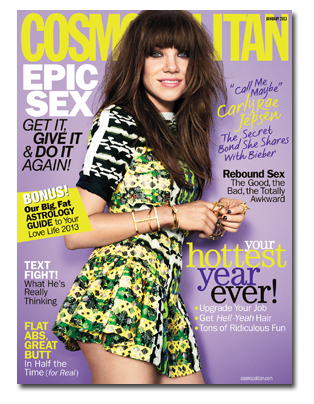
Cosmo Red Hot Reads
A little titillation tonight.

The magazine publishing industry is expanding its revenue base it seems --- by experimenting with the e-book publishing market (and why not? Everybody else is).

And in an outstanding and very successful genre at that: the women's and romance slice of the written word universe.

In the case described in tonight's post it is Cosmopolitan magazine (in Hearst magazine's stable) teaming with Harlequin, a huge women's and romance novel publisher. The business numbers and thinking behind Cosmo's decision to explore e-book publishing is also touched upon.

And what will be the name of this collaboration ? The same branding as the content section of Cosmo magazine that publishes literature for readers:

Cosmo Red Hot Reads :)  

T. J. Raphael reports this in FOLIO magazine:

Hearst Jumps Into E-Book Publishing With Cosmo Red Hot Reads

Two original e-book titles to be published per month beginning in May 2013.

Hearst Magazines is testing out the e-books market with the safety net of the world’s largest women’s magazine—Cosmopolitan. In a joint partnership with Harlequin, a women’s and romance novel publisher that spans 114 international markets, Hearst will introduce digital books bearing the Cosmopolitan logo.

Under the agreement, Harlequin intends to publish two original 30,000-word e-book titles per month beginning in May 2013. The novels, which will be written by some of Harlequin’s bestselling authors, will take on the brand’s editorial voice and be reminiscent of the popular title Fifty Shades of Gray, editor-in-chief Joanna Coles says in a statement.

“We took a look at some of our studies and it turns out 1 in 7 Cosmo women read romance novels, more than 10 million Cosmo readers bought at least one book in the last 12 months and 1.8 million readers bought at least one romance novel,” Mark Gompertz, creative director of Content Extensions for Hearst Magazines, tells FOLIO:. “We didn’t have to be convinced anymore that this was the time to create a line of romance fiction.”

Cosmo Red Hot Reads is a content section with the magazine that publishes literature for readers. These shorter length books published by Harlequin will share that branding and cover the same type of subject matter that this content section in Cosmo is known for.

“Romance readers were really the first to embrace e-books when the trend started,” says Gompertz. “These readers buy multiple books at a time and are constantly reading so we wanted to make them long enough so the reader would be absorbed, but short enough so they could read another right after the last page is turned—that’s really the Harlequin thing.”

These e-books will be available for all major platforms and devices—e-readers, tablets and smartphones for Apple, Android and Windows products. Gompertz says some of the more successful titles could also wind up in print, though the main focus is on the digital landscape. Right now the book will be all content but it is possible that editions could see images or interactivity in the future. Hearst and Harlequin are still determining how to price these books.

Read and learn more

The Writers Welcome Blog is available on Kindle for convenience :)))


Monday, January 28, 2013

Academic Publishing Intrigue: The Privatization of Knowledge & The Monopoly of Information

Academic Publishing about to bust out
of unjust confinement 
A gigantic publishing injustice is reaching its inevitable, explosive, self-annihilation finale!

Talk about publishing intrigue --- I have posted on the rustling of academic publishing before on both this blog and my Publishing/Writing: Insights, News, Intrigue blog --- Feel free to read for more background on tonight's very relevant post on modern day publishing bandidos that can affect world society to its innermost core.

Tonight's subject/issue is tied to the unfortunate, recent death of Aaron Swartz, founder of Demand Progress and a relentless activist for the Open Access movement in academic research and publishing.

"Swartz was recently put on trial for illegally downloading over 4 million JSTOR articles through the Massachusetts Institute of Technology (MIT) network, a crime for which he could have been sentenced to 35 years in prison had he not committed suicide before the verdict had been finalized." (JSTOR is short for Journal Storage and is a digital library founded in 1995. Originally containing digitized back issues of academic journals, ...) 

What a terrible loss and a scourge upon all those responsible for his suicide!

This by  in The McGill Daily, a student newspaper at McGill University in Montreal, Canada, in production for 100 years:

The future of academic publishing

What the Open Access movement is all about

“The world’s entire scientific and cultural heritage, published over centuries in books and journals, is increasingly being digitized and locked up by a handful of private corporations.” These were the words of Aaron Swartz, founder of Demand Progress, a grassroots organization concerned with civil liberties and government reform, and a relentless activist for the Open Access movement. Swartz was recently put on trial for illegally downloading over 4 million JSTOR articles through the Massachusetts Institute of Technology (MIT) network, a crime for which he could have been sentenced to 35 years in prison had he not committed suicide before the verdict had been finalized. The tragic loss of Aaron Swartz raises many sensitive issues regarding internet law, but most of all it stresses the importance of the open access cause. So, what is the Open Access movement, and what is it trying to achieve?

Peter Suber, director of the Harvard Open Access Project, defines Open Access as “literature [that] is digital, online, free of charge, and free of most copyright and licensing restrictions.” This definition is usually, but not always, applied in the context of digitized scholarly articles and journals. While no single and unified Open Access organization exists, it is generally accepted by Suber and other scholars that supporters of the Open Access movement expect publicly-funded research to be royalty-free and publicly available on the internet. Nonprofits such as Public Library of Science, Scholarly Publishing & Academic Resources Coalition, and Open Access Scholarly Publishers Association all strive to promote open practices within modern academia.

Open Access, however, is up against a rigid academic system. In a past with no internet, journals were trusted sources of sharing academic knowledge; they disseminated information through a subscription-based service provided to academic and professional institutions. In today’s academia, journals rarely publish physically, instead opting for publishing through scholarly databases such as JSTOR. Multi-billion-dollar companies such as Reed Elsevier, Thomson Corporation, and Kluwer Academic Publishers now own a significant portion of the top 7,000 journals currently in circulation. Subscriptions to these journals average thousands of dollars, while access to a single journal article can cost a non-subscriber up to $50 to access. In the eyes of Swartz, as well as many Open Access supporters, the soaring prices are hard to justify.

Indeed, this paradox of pricing has been at the core of the Open Access argument. In 2009, the University of Illinois outlined that “between 1986 and 2004, journal expenditures of North American research libraries increased by a staggering 273 per cent…[outstripping] inflation by a factor of almost four.” This has led universities to cancel journal subscriptions; in 2006 alone, the University of Illinois cancelled subscriptions to over 200 Elsevier journals, citing rising subscription costs as the issue. It seems as though individual users are not the only ones feeling the tight grip of big-business publishing.

However, the opposition to academic journals is not only based on rising costs. In general, scholarly journals also tend to be extremely restrictive when it comes to their content. “There are certain journals that are considered top-tier, and they have control over the dissemination of ‘acceptable scholarly knowledge,’” said Professor Shaheen Shariff, of the Department of Integrated Studies in Education at McGill, in an interview with The Daily.

The idea that research should be free and open to the public has been an ideological driving force for the movement. Swartz’s “Guerilla Open Access Manifesto,” for instance, implies the moral danger of not resisting “the privatization of knowledge.” The monopoly on information is increasingly an issue for the scientific community; an issue to which making journals open access seems to be the only solution.

Open Access publishing has been around for a while. Although it is difficult to accurately pinpoint the origins of the Open Access movement, the Open Access Directory lists several peer-reviewed journals that started appearing within the first few years of the internet; between 1983 and 1990. Professor Gabriella Coleman, Wolfe Chair in Scientific and Technological Literacy at McGill, suggests that the movement took off following the success of the Open Source movement, at the turn of the 21st century, which was primarily concerned with providing software free of charge to the public to promote learning.

While Open Source has thrived, Open Access has remained relatively underground. The current academic system remains resilient to change despite the movement’s best efforts. “In the Social Sciences and Humanities, I do not know a single prestigious, long-standing, existing journal that has gone open-access,” Coleman said in an interview. Reform, at least for now, does not seem to be the answer.

Read and learn more

Get The Writers Welcome Blog on your Kindle :)))


Wednesday, January 23, 2013

Covers for Books and Magazines = Marketing Supremo


Book Covers Sell
Books
'Put on your best face', 'Put your best foot forward', etc., etc., are sayings that convey making the very best first impression.
 
Marketing yourself, so to speak.
 
In the case of books and magazines, the covers ARE
the first impressions and the ultimate, initial marketing impacts (enormous sales made just from covers).
 
 
What do you think are the best secondary and on-going marketing impacts? - This writer thinks its probably reviews, word of mouth and social media today.
 
Anyway, I thought a review of the critiques of leading magazine covers for 2012 given in the December, 2012, FOLIO: magazine would be enlightening and fun: 
 
Every month, FOLIO: selects a small group of designers and art directors to offer critiques on visually-engaging magazine covers. The cover, after all, is the first point of entry for any magazine, retail or otherwise.

This past year has produced a variety of arresting cover images that are designed to capture the attention of a reader and, ultimately, capture a sale. Here, FOLIO: rounds up six designers—including our own—and asks them to weigh in on their favorite cover of the year.

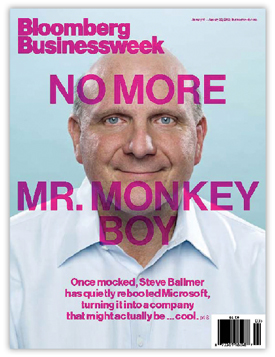
TITLE: Bloomberg Businessweek
ISSUE: January 16-22
CIRCULATION: 993,267
PUBLISHER: Bloomberg L.P.
CREATIVE DIRECTOR: Richard Turley

“I remember the moment I first saw this issue on the stands—I either said, or maybe just thought, ‘Oh, _ _ _ _.’ I know it’s not for everyone, it’s not slick—it’s sick. I know, it’s not fair, as art director Richard Turley is allowed to do anything he wants over there, but the thing is, he does it!

This could have been the hundredth iteration, or the first one just tossed off. Who cares? It’s more powerful and memorable than any of the made-by-committee, hand-lettered, 10-color covers around. The ‘What Me Worry?’ photo reminiscent of MAD magazine, the crazy cover lines and their placement, the garish overall one-color scheme—what’s that doing on a commercial, serious, nay, kind of boring, business magazine? It’s being awesome, that’s what.”
- Helene Silverman, Design Director, Architectural Record

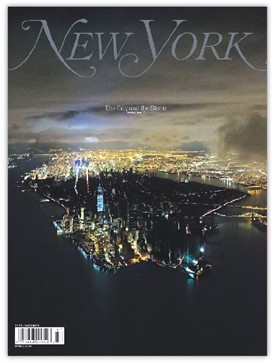
TITLE: New York
ISSUE: November 12, 2012
CIRCULATION: 405,149
PUBLISHER: New York Media LLC
DESIGN DIRECTOR: Thomas Alberty

“Few covers this year had as much visual and emotional impact as New York magazine’s cover story on Hurricane Sandy. In this day and age when newsstand sales dictate that covers be loud and garish with multiple cover lines and inane promises (BETTER SEX NOW! KILLER ABS IN 7 DAYS!), it’s refreshing to see a sober and simple approach to such an important topic. The cover photo—showing a divided Manhattan—and the restrained use of type speak volumes. The work is both stunning and somber and should remind all art directors that an effective cover need not yell at its audience.”
- Todd Johnson, Creative Director, D Magazine Partners

“This has to be one of the toughest assignments I have had this year—to pick my favorite cover from the last 11 months. To make sure I had covered my bases I searched covers online, went to websites of my favorite magazines, reviewed blogs, and looked through the piles on my shelves. But, in the end, I chose the cover of a magazine sitting on my coffee table (yes, it was actually on my coffee table).

The November 12 cover of New York magazine, “The City and the Storm,” is successful on multiple levels—for graphic impact, telling a story, maintaining a brand, and paying attention to the details of design. And the magazine staff managed to create this cover and issue while dealing with their own loss and devastation.
When you first look at this cover it is quiet and poetic. But then it pulls you in and makes you wonder what it would feel like to be on one of those dark streets, cold apartments and wrecked homes. In the Letter from the Editors they note selecting this image for the cover was “the easiest part of a harried three days…the clear choice for the way it fit the bigger story...about a powerful city rendered powerless.” I have not lived in NYC since 1995, but New York magazine always makes me feel connected through its honest celebration of the city and people.

Finally, the design of the cover celebrates the photo with a subtle logo, small headline, and date in black. All the details sit back and let the photo tell the story. Beautiful.”
- Kelly McMurray, Creative Director, 2communiqué

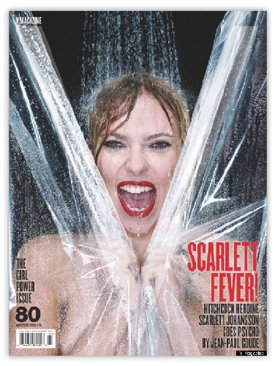
TITLE: V Magazine
ISSUE: Winter 2012/2013
CIRCULATION: 100,000
PUBLISHER: Visionaire Publishing
ART DIRECTOR: Sandra Kang

“A naked Scarlett Johansson on your cover is probably enough for newsstand success. But the creative team at V Magazine didn’t simply rely on the ‘sex sells’ mantra for their Winter 2012/2013 cover. This issue features the lovely actress recreating the iconic Psycho shower scene and there are really a lot of great things going on with this cover.

The image itself is striking and immediately recognized by most readers. It’s also cleverly cropped and composed, allowing the “V” logo to nicely blend into the shower curtain. Cover lines are kept simple and sparse, letting the image remain the focal point. Finally, the story and image are also relevant and timely, coinciding with the release of the new biographical drama ‘Hitchcock,’ which was released one week after this issue hit newsstands. All these things add up to a unique, clever, intriguing, and well-composed cover!”
- Daniel Trombetto, Creative Director, R7M Publishing (Publisher of FOLIO:)

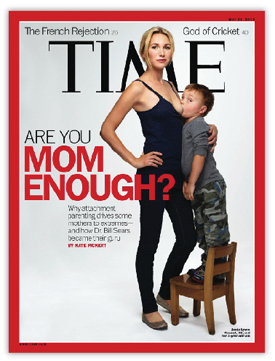
TITLE: TIME
ISSUE: May 21, 2012 | Vol. 179 No. 20
CIRCULATION: 3,276,822
PUBLISHER: Time Inc.
DESIGN DIRECTOR: D.W. Pine

“There were many great covers in 2012, so choosing one was a close race. I generally lean toward a cover that conveys a range of topics through subheads and typography that give the readers a more broad appeal (such as my close runner up in Esquire’s January 2012 cover). But, this cover from Time magazine is too impactful to overlook. I remember when I first saw this cover I thought, ‘Wow, what stones of them!’ I recalled all the chatter amongst the cubicles and offices and I immediately knew that regardless if you agree or not with the subject matter, this cover is a winner!

Our goal as designers and art directors is to make an impression to get readers into our pages and talking about our brands. In my opinion, this cover wins all races in 2012. Despite the simple nature of the cover and image, it’s the shock factor that got me, and the nation. Simple, clean and airy—not too much type to distract, but just enough to provoke.”
- Luke Hodsdon, Director of Design, Churm Media Inc.

Read and learn more

Get the Writers Welcome Blog on your Kindle :)))