expr:class='"loading" + data:blog.mobileClass'>

Pages

Friday, January 18, 2013

Digital Content - Writing to Enthrall Readers and Tickle Web Crawlers

Writing to attract
web crawlers
Creative writing is the portal to our thoughts --- But, choppy, snippet, repetitive writing attracts web crawlers.

How to bring these two divergent writing personalities together?

That is the question --- And, if answered, will empower digital writers to dance and swing across all media formats with stupendous success.

Michelle Wicmandy, contributor to Website Magazine, has this to say in the February, 2013 issue:

Captivating Readers While Attracting Web Crawlers

Today’s digital writer has two audiences: readers and Web crawlers. Unfortunately, the two have distinct tastes.

The latter, for example, prefers keyword repetition, which works to achieve higher search engine rankings (thus, maintain visibility with an audience). This “over-optimized” style of writing, however, can attract Web crawlers but can also lose a reader’s interest. On the contrary, online readers demand relevant information in easy, bite-sized pieces. Being brief, by using sentence fragments, bullet points and reporting “just the facts” increases reader interest but may sacrifice SEO-driven rankings.
And, despite the different preferences of readers and Web crawlers, both are seemingly interrupting the creative prose of yesterday.

“It’s not a trend I agree with,” said Lynda McDaniel, founder of the Association for Creative Business Writing and co-founder of The Book Catalysts. “That [brevity] style won’t bring anything to life, especially not the readers. Writing is the portal to our thoughts, and if we write in snippets, our thoughts will be just as abbreviated. To keep your content interesting and hold the reader’s attention; write to the reader, write for the reader and write from the heart. Write as if you’re talking with a friend — or at least someone representative of your readership. Engage the reader with stories and compelling information, not just short little blurbs.”

Words trigger emotion and form bonds with the reader. McDaniel thinks an importance should be placed on writing interesting content using clarity, fresh associations and interest angles. To create visuals and actions in the reader’s mind, try incorporating a few of the following techniques:

Appeal to the senses: Use language to paint imagery, create sound and describe an aroma, taste or texture. For example, if your business received an award, try “Within minutes of the news, music rocked the room and champagne corks were popping,” instead of “We won the award.”

Document sources to support opinions: To support ideas and attract Web crawlers, provide evidence from reliable, credible sources, such as research organizations, traditional media, government sources and associations.

Develop a sense of scale: Create an analogy using common knowledge to present unfathomable ideas, such as large numbers. Not only does this add interest, but it is also powerful imagery. For example, 1 second is 1 second (and easy to comprehend), but 1 million seconds is equivalent to 12 days. And, 1 billion seconds is equivalent to 30 years. Describing a product that measures 3.3 x 2.2x 0.8 inches? Don’t leave the reader guessing about what that means. Explain that it fits inside of an Altoid mint container.

Read and learn more

Get the Writers Welcome Blog on your Kindle :))) 


Sunday, January 13, 2013

More Thoughts on E-Book Costs

Just how are e-book costs
arrived at?
I guess I'm the eternal idealist because I feel the content (quality of, likability, timeliness, entertainment value, etc.) should drive the cost of books, in whatever format, and not just the manufacturing and distribution costs (or lack of) --- which so many are using to justify why e-books should be cheaper than their  printed counterparts.

I have previously written many times about e-book costs on both this blog and the Publishing/Writing: Insights, News, Intrigue Blog (just refer to the labels on these sites).

Tonight we're presenting some old and new thoughts on this subject:

'E-books don't involve costs like paper, labor, and shipping, so why do they often cost more than their paperback counterparts?'

Some TP's say “The elimination of manufacturing and distribution costs are being offset by retail price reductions and the additional costs I have outlined. The good news is that we are making about the same margins, regardless of whether we sell the book in physical form or digital.”

'E-books cost as much to produce as hardcopy? Hogwash.'

'Anyone who produces anything digital that was formerly physical knows digital is cheaper. A website is cheaper than a newspaper. A digital version of a video costs less to deliver than a tape. An e-book costs less than a physical book. Anyone suggesting otherwise, like this publishing executive, probably has a dog in the fight.'

See these thoughts and others come together in this piece by Stacy Johnson in the Christian Science Monitor:

Why do e-books cost so much?

E-books don't involve costs like paper, labor, and shipping, so why do they often cost more than their paperback counterparts? Here's the answer, and why e-book prices may be falling in the future.

Here’s a question I got on our Facebook page. Maybe you’ve wondered about it too.

Why do your Kindle books cost more than a paperback copy? The Kindle version of Life or Debt on Amazon costs $9.73, but they’re selling the paperback for as little as $6.00. Since e-books should cost much less to produce, why do they cost more to buy? This seems unfair, especially when you’re writing about how to save money to pay off debt.
- Ted
I got a very similar question a little more than a year ago, published in a post called "Why Are E-Books So Expensive?" I’m going to answer it again, however, because since then things have happened that shed more light on this subject.

As I said in my earlier post, I have no control over the price of my books. When you work with a traditional publisher (mine is Simon & Schuster), you have no input – they set the price.

Whoever establishes the price, however, you’ve still got to wonder…

Why are e-books so expensive?

The first time I attempted to answer this question, I quoted an article called "Why Do eBooks Cost So Much? (A Publisher’s Perspective)" by Michael Hyatt, CEO of Thomas Nelson Publishers. Here’s how he justified the high cost of e-books…

Read and learn more

Get The Writers Welcome Blog on Kindle :)))


Monday, January 7, 2013

Content - Linking Print To Mobiles

Who said you have to have either print or mobile? Why can't you have both experiences at once?

Well, you CAN.

'Publishers are literally driving engagement between the print product and digital platforms...'

"How?" you ask. One way is to link print magazines directly to smartphones and tablets via apps.

Tonight's post will illustrate one print magazine that has done this and will delve into the resulting impressive numbers.

By T.J. Raphael, FOLIO magazine, Publishing Technology section:


Connecting Print and Mobile

As more users interact with content on mobile platforms, publishers are directly linking print to phones and tablets.

Publishers are literally driving engagement between the print product and digital platforms by linking print magazines directly to smartphones. The idea aims to neutralize the “either-or” aspect of print and mobile and merge the strengths of both.

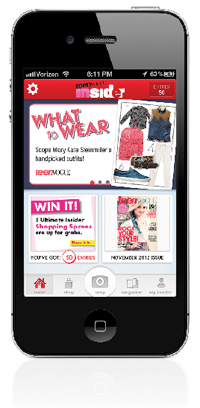
“We’re connecting print to mobile because we believe we’re well poised with our demographic—they are glued to their phone,” says Jason Wagenheim, vice president and publisher of Teen Vogue. “We did a study earlier this year that found that 9 out of 10 of our readers are shopping with their mobile phones. They’re not just making purchases, but using their phone while they’re shopping, searching for coupons and texting friends photos of dresses when they’re in a store.”

Attaching Apps to Print

Based on this, the magazine developed the Teen Vogue Insider app, which is a companion to the magazine. It allows readers to “like” and share brands on Facebook, Twitter and over email as well as map nearby locations to make purchases. Editorial or advertiser-based slideshows and videos are also available. Finally, discounts and special offers are pushed out through the app.

The app is updated to coincide with every issue of Teen Vogue, further tying the mobile experience to print. By having it as a companion to every single issue, Wagenheim says the brand is changing reader behavior that will enhance attachment to the print magazine.

“The app is promoted in every issue with advertising and editorial,” he says. “There’s also a directory featuring all of the pages within the magazine that can be activated with a mobile scan—we use image recognition, not QR codes. You can use the app to scan pages in the magazine to launch these engagements.”

As of press time, the app has been downloaded 80,000 times in the three months since its launch; there have been over 250,000 scans of magazine pages and over 550,000 user sessions.

Every Page Mobile-ized

Read and learn more

The Writers Welcome Blog (WWB) is available on your Kindle :)))


Tuesday, January 1, 2013

Bookstores Down - Libraries Up

Vicki Culler shops for discounted
books at the Friends of the Public
Library in Cincinnati.


Bookstore closings have provided an opportunity for high-end library models that should cough up cute cash and increase dynamic library traffic.

As reported in The New York Times by Karen Ann Cullotta, the sad closing of bookstores has provided an opening for many libraries to reinvent the town square with best sellers and coffee --- and, I might add, a certain milieu or AMBIANCE :)

Tonight's post also provides an inside peek at a library's business plan, strategy and structure.

This, then, by Karen Ann Cullotta, NYTimes:

Libraries See Opening as Bookstores Close


At the bustling public library in Arlington Heights, Ill., requests by three patrons to place any title on hold prompt a savvy computer tracking system to order an additional copy of the coveted item. That policy was intended to eliminate the frustration of long waits to check out best sellers and other popular books. But it has had some unintended consequences, too: the library’s shelves are now stocked with 36 copies of “Fifty Shades of Grey.”
Of course, librarians acknowledge that when patrons’ passion for the sexy series lacking in literary merit cools in a year or two, the majority of volumes in the “Fifty Shades” trilogy will probably be plucked from the shelves and sold at the Friends of the Library’s used-book sales, alongside other poorly circulated, donated and out-of-date materials.

“A library has limited shelf space, so you almost have to think of it as a store, and stock it with the things that people want,” said Jason Kuhl, the executive director of the Arlington Heights Memorial Library. Renovations will turn part of the library’s first floor into an area resembling a bookshop that officials are calling the Marketplace, with cozy seating, vending machines and, above all, an abundance of best sellers.

As librarians across the nation struggle with the task of redefining their roles and responsibilities in a digital age, many public libraries are seeing an opportunity to fill the void created by the loss of traditional bookstores. They are increasingly adapting their collections and services based on the demands of library patrons, whom they now call customers.

Today’s libraries are reinventing themselves as vibrant town squares, showcasing the latest best sellers, lending Kindles loaded with e-books, and offering grass-roots technology training centers. Faced with the need to compete for shrinking municipal finances, libraries are determined to prove they can respond as quickly to the needs of the taxpayers as the police and fire department can.

“I think public libraries used to seem intimidating to many people, but today, they are becoming much more user-friendly, and are no longer these big, impersonal mausoleums,” said Jeannette Woodward, a former librarian and author of “Creating the Customer-Driven Library: Building on the Bookstore Model.”

“Public libraries tread a fine line,” Ms. Woodward said. “They want to make people happy, and get them in the habit of coming into the library for popular best sellers, even if some of it might be considered junk. But libraries also understand the need for providing good information, which often can only be found at the library.”

Cheryl Hurley, the president of the Library of America, a nonprofit publisher in New York “dedicated to preserving America’s best and most significant writing,” said the trend of libraries that cater to the public’s demand for best sellers is not surprising, especially given the ravages of the recession on public budgets.

Still, Ms. Hurley remains confident that libraries will never relinquish their responsibility to also provide patrons with the opportunity to discover literary works of merit, be it the classics, or more recent fiction from novelists like Philip Roth, whose work is both critically acclaimed and immensely popular.


Read and learn more

Get this Publishing/Writing Blog on your Kindle :)))

Tuesday, December 25, 2012

A Little Naughty Merry Christmas Plus

Were you naughty or nice
this year?
I sincerely wish all a very Merry Christmas :)

Take a break from all the rush and enjoy a little Christmas humor.


Top 10 Things that Sound Dirty at Christmas, But Aren’t


10. Did you get any under the tree?

9. I think your balls are hanging too low.

8. Check out Rudolph’s Honker!

7. Santa’s sack is really bulging.

6. Lift up the skirt so I can get a clean breath.

5. Did you get a piece of the fruitcake?

4. I love licking the end till it’s really sharp and pointy.

3. From here you can’t tell if they’re artificial or real.

2. Can I interest you in some dark meat?

1. To get it to stand up straight, try propping it against the wall.


Christmas Card problem solved!

Last Christmas, grandpa was feeling his age, and found that

shopping for Christmas gifts had become too difficult. So he

decided to send checks to everyone instead.

In each card he wrote, “Buy your own present!” and mailed them

early.


He enjoyed the usual flurry of family festivities, and it was

only after the holiday that he noticed that he had receiving very

few cards in return. Puzzled over this, he went into his study,

intending to write a couple of his relatives and ask what had

happened. It was then, as he cleared off his cluttered desk that

he got his answer. Under a stack of papers, he was horrified to

find the gift checks which he had forgotten to enclose with the

cards.


A Car For Christmas


Danny had recently passed his driving test and decided to ask his clergyman father if there was any chance of him getting a car for Christmas, which was yet some months away. ‘Okay.’ said his father ‘I tell you what I’ll do. If you can get your ‘A’ level grades up to ‘A’s and ‘B’s, study your bible and get your hair cut, I’ll consider the matter very seriously.’

A couple of months later Danny went back to his father who said ‘I’m really impressed by your commitment to your studies. Your grades are excellent and the work you have put into your bible studies is very encouraging. However, I have to say I’m very disappointed that you haven’t had your hair cut yet.

Danny was a smart young man who was never lost for an answer. ‘Look dad. In the course of my bible studies I’ve noticed in the illustrations that Moses, John the Baptist, Samson and even Jesus had long hair.’ ‘Yes. I’m aware of that…’ replied his father ‘… but did you also notice they walked wherever they went?’


Christmas Answers

Q: If athletes get athletes foot, what do astronauts get?


A: Missletoe!


Q: What do you get when you cross a snowman with a vampire?

A: Frostbite.


Friday, December 14, 2012

The New york Times and Bite-Sized Digital Books Known as "E-Singles"

New York Times is getting into the business of
selling digital books based on its reporters' work,
 giving it entry into growing market for inexpensive
"e-singles" that can be read in a couple of hours.
A growing need for content, generated by tablet, e-reader and other mobile gadget popularity, has produced an up and coming e-model: e-singles.

The New York Times is now entering the e-book publishing field by having its journalists put current (and past) news stories of dynamic interest into bite-sized digital books called e-singles.

These so-called bite-sized digital e-books can be anywhere between magazine article size, which can top out at about 10,000 words, up to ?? .

"The Times' first mini book will go on sale Monday. It's an 18,000-word piece about skiers caught in an avalanche by Times reporter John Branch. The story, called "Snow Fall," expands on an upcoming piece in Monday's newspaper." --- Excerpt from the following piece in The Times of India:

New York Times enters e-book publishing market

The New York Times is getting into the business of selling bite-sized digital books based on its reporters' work, giving it entry into a growing market for inexpensive "e-singles" that can be read in a couple of hours.

The Times' first mini book will go on sale Monday. It's an 18,000-word piece about skiers caught in an avalanche by Times reporter John Branch. The story, called "Snow Fall," expands on an upcoming piece in Monday's newspaper.
It will sell for $2.99 in Amazon.com's Kindle store, Apple's iBooks, and on Barnes & Noble's Nook.
E-singles fall somewhere between magazine pieces, which can top out at around 10,000 words, and full-length books, which can run around 100,000 words.

The product meets the rising demand for content as people buy tablet computers like the iPad and Kindle Fire in increasing numbers. IHS expects global shipments of tablets to hit 120 million this year, just two short years after the iPad jumpstarted the category in April 2010. Tablet shipments are expected to hit 340 million in 2016.

And people aren't just watching movies and surfing the web on their mobile devices. The Pew Research Center's Project for Excellence in Journalism said in October that half of US adults own a tablet or smartphone, and two thirds of them get news on their device.

The quick turnaround of digital publishing means non-fiction work remains timely.

Gerald Marzorati, the Times' editor for editorial development, said the company is betting the new format will make long-form journalism easy to read and reach people who don't visit the Times' website or read the newspaper.

"We're going to really experiment in the first year with different sorts of forms - long essays, long narratives," he said. "We may even try collections. We're just sort of experimenting with this form and we'll see if getting something at a very reasonable price in book form is something that appeals to people."

Read and learn more 

Get the WWB (Writers Welcome Blog) on your Kindle :)))


Friday, December 7, 2012

Ereaders, Brazil and Marketing Gamesmanship

The Brazilian Flag
There are many fine ereaders on the market nowadays. But it wasn't always that way when they were just popping out of their tech wombs.

Tonight's post will take you inside a little intriguing history of how the new ereaders on the blockjostled with each other to be the chosen one --- and demonstrates to what extent ereader companies, such as Kobo, Amazon and Google, will go in gamesmanship when launching first ebookstores this week in Brazil within hours of each other --- all after nearly a year of anticipation, negotiation and planning.

So, what's behind this rush to market in Brazil?

Edward Nawotka, Publishing Perspectives, gives us the answer:

What’s Behind Kobo, Google and Amazon’s Simultaneous Brazil Launch?

Usually, Kobo is first. Or at least that’s what they will tell you. A few years ago during BookExpo America, the company announced a new ereader just minutes before Barnes & Noble revealed a similar device, after having sent out press invitations more than a week earlier. Technically Kobo was “first,” but it left one with the distinct impression they were merely crying “me too, me too” — rather than having innovated anything as such.

In Brazil this week, we saw the same kind of gamesmanship, with Kobo, Google and Amazon all launching ebookstores within hours of each other — all after nearly a year of anticipation, negotiation and planning. Kobo was, natch, “first”—and here proper credit isdue — having announced their partnership with Livraria Cultura bookstore chain months ago. Amazon was the subject of rumors concerning a deal with Brazil’s dominant bookstore chain Saraiva, so we knew something was happening, even if the notoriously secretive company wasn’t revealing its hand. Goole was…well, just being Google — that is, silently ubiquitous. Apple, meanwhile, jumped in last month with their half-baked iBookstore “window” for Brazilians, but that doesn’t quite count as a proper launch.

So what is behind all this “rush to market.” Is it pursuit of the so-called “first mover advantage?”

In ebooks, first-mover advantage would seem to make a huge difference, as buyers — particularly in developing markets — are likely to commit to a single reading device and stick with it. But in Brazil, where relatively few devices are available (iPads, one Kobo, no Kindles, a few white label readers…but hundreds of millions of cell phones), it wouldn’t seem to make a difference. Well, yes, for Kobo it would. But for Amazon and Google, whose apps are available on multiple formats and, in the case of Google, every Android phone — what’s the rush? And why chase?

It all harks back to the early ebook days, when bookstores touted the increasing number of titles they had on offer like some kind of pointless Cold War escalation.

And, as Irish publisher and pundit Eoin Purcell pointed out last week and as we saw in Japan — where Amazon learned from Kobo’s mistakes — sometimes waiting on the sidelines can be an advantage (could this be B&N’s strategy in Brazil?).

Read and learn more

Get the WWB (Writers Welcome Blog) on your Kindle :)))