expr:class='"loading" + data:blog.mobileClass'>

Pages

Sunday, February 16, 2014

Discrimination in the Publishing Industry? You Bet!

Discrimination has always existed. In the past, to heavy degrees; currently, to a little less than heavy degrees and in the future, hopefully, to much lighter degrees.

What am I saying here? That discrimination will never go away? I guess I am. Because as soon as one 'type' of discrimination goes away (actually becomes minimal - I don't think they will ever go away completely), another 'type' will take its place. The dark side of human nature will see to that.

Discrimination is something we all have to fight against constantly to improve our world as well as ourselves. Sort of like a built-in sharpening stone we have to hone ourselves against everyday to stay sharper (more intelligent and humane).  

Now, there are all types of discrimination, but we will be addressing racial discrimination tonight - in the publishing industry.

Just look on Amazon - you will find over two million books, both legacy and self-published. Of these, only about 15,000 are from African American authors. And don't OVERSIMPLIFY and say 'African Americans' just don't read and write as much!

We are going to get into that with tonight's source article written by  on Good E reader.com:


Does the Publishing Industry Discriminate?


A quick search of the Amazon Kindle store reveals over two million titles, both legacy and self-published. But a search for books tagged “African American” reveals only slightly more than 15,000 titles combined. Add to the lack of dedicated reading material, stores that focus on demographic-specific titles are facing hardship as well.
An article by Judith Rosen for Publisher’s Weekly this week indicates that African American bookstores are suffering, even during this month that is so typically a high point for sales due to the attention given the Black History Month. According to the article, the number of black bookstores who were members of the American Booksellers Association has resulted in more than 200 store closings in the last twelve years alone, down to 100 member stores from over 300 in 2002.
Rosen pointed to certain economic factors, such as the destruction of major metro neighborhoods that at one time played host to bookstores who stocked black literature. That has been compounded by the loss of platforms like key magazines that at one time promoted black authors’ titles.
But while it is the physical bookstores that are suffering, what is the correlation between that and the unequally low number of titles available on Kindle? Are publishers and self-published authors simply not writing and releasing books that speak to a specific market of readers? And if not, why not?
One source in the article quite openly stated that black consumers simply don’t read as much, but that is too easy a statement to oversimplify, one that could quite easily be the result of a chicken-and-egg situation. Do publishers not produce as many African American titles because they, too, believe this? Or is the lack of titles that speak to the consumer the reason for this generalization?
Recent news from a number of successful authors has made it quite obvious that self-publishing is the great equalizer in the book industry, one that is presumably open to authors from all walks of life. During this month of historical awareness, hopefully more concerted efforts will be made to open the doors of self-publishing to a far underserved group of readers.





Saturday, February 8, 2014

Spotlighting 'Print on Demand'

What's happening with print on demand? What's the latest? What's the future of print on demand?

While new publishers are focusing almost exclusively on digital publishing processes to capture the growing tablet and other mobile audience, some innovative publishers, with perhaps a longer vision, have been employing, tweaking and improving the POD (print on demand) technology to enter into the print marketplace for the first time, and connect a new generation of readers to print books through personalization.  

So, just how are these new POD applications being exploited? And by whom?

Hoffman Media and Sourcebooks are two publishers that are increasingly using POD technology - and tonight we will delve into how and at what costs and savings and success levels they are doing it.

But first, for those who might need a little refresher on the details of POD:

"Print on demand (POD) is a printing technology and business process in which new copies of a book (or other document) are not printed until an order has been received, which means books can be printed one at a time. While build to order has been an established business model in many other industries, "print on demand" developed only after digital printing began,[1] because it was not economical to print single copies using traditional printing technology such as letterpress and offset printing.
Many traditional small presses have replaced their traditional printing equipment with POD equipment or contract their printing out to POD service providers. Many academic publishers, including university presses, use POD services to maintain a large backlist; some even use POD for all of their publications.[2] Larger publishers may use POD in special circumstances, such as reprinting older titles that are out of print or for performing test marketing.[3]"  
--- Wikipedia

Now, this by Erin L. Cox as published in Publishing Perspectives:


The Future of Print --- On Demand

This article is a part of a series on print-on-demand, sponsored by Ingram Content Group.

For the last five years, while many publishers have been focusing on digital innovation in order to capture the attention of what appeared to be a growing audience of tablet owners, some innovative publishers have been finding new ways to use print on demand services from Ingram Content Group to repackage content, enter into the print marketplace for the first time, and connect a new generation of readers to print books through personalization.
Because print on demand eliminates a number of costs by allowing publishers to print with a relatively short turn-around or through a small print-run, it has allowed some publishers to rethink their print business, offer new opportunities they previously had not explored, and even take bestselling ebooks and create print versions of those titles.
Lifestyle magazine publisher, Hoffman Media, known for Victoria and Cooking with Paula Deen, had never previously published books of their content in quite this way before. Greg Baugh, Vice President, Manufacturing saw that he could create the same premium product that they create with their magazines through hardcover books. But, he wasn’t sure whether the marketplace was ready for such a product, so he opted for print on demand to test their audience. “Though the publishing of books using print on demand is not entirely risk-free, there is very little labor involved and, though we have only just begun by publishing 6 titles so far, we are seeing sales that pleased us,” said Baugh.
Because Hoffman publishes magazines, they already had edited work with rich photography ready. So, the work they needed to do to make the content ready for a book was take the ads out, change the trim size, fix pagination flow, and alter the Table of Contents — about four hours work, all told. Though they have started with only six titles, Baugh said that they are expanding to further titles in the future.
Sourcebooks, whose CEO Dominique Raccah was named FutureBook’s Most Inspiring Digital Publishing Person of 2013, offers both the digital and print versions of their “Put Me in the Story” program which allows readers to personalize their favorite bestselling books. Partnering with such classic children’s brands as “Sesame Street,” The Berenstein Bears, and Hello Kitty, Sourcebooks offers the opportunity for parents to download the app to create an ebook or have a book printed using print on demand.
In an article in The New York Times when the program was announced, Raccah said, “We started with two very distinct challenges: How do we create a more meaningful bedtime reading experience for parents and their children? And, as a publisher, how do we build a digital future for children’s book authors and illustrators?” By allowing both ebook and printed personalized books for children, they are doing just that.

Sunday, January 26, 2014

Just What Is The Netflix of Books?

Oyster offers more than 100,000 books in an
all-you-can-eat subscription model.
Of all the media substrates, the book and publishing industries have been notoriously slower to react, adapt and change. And this has proven true in the acceptance of the so called 'all you can eat' subscription models.

For one small monthly subscription fee one can gain instant access to huge libraries of hundreds of thousands of books.

What determines the ultimate success of these programs is the quality and quantity of books offered --- and this is built upon the quality of publishers (both big and smaller houses) that offer their books in these subscription models.

So, just how do publishers get paid under these business models? How do the writers/content providers get paid? What is the advantage to readers?     

A key excerpt from tonight's research source: 

"But the fundamental benefit for publishers is that by creating this fundamentally better reading experience, we can grow the pie for the industry. That means getting people to read more books, bringing in new audiences, and if we're able to do that, it's ultimately a win for us as a company."

So, essentially, if you start with satisfying the readers (the end users of your product) first, you will invent a sustainable model that makes money and is a win win for all players.

The following interview with Eric Stromberg, CEO of Oyster (among the first to offer the subscription model for books) will answer the questions raised above.

This interview is conducted by Daniel Terdiman, a senior writer for CNET:     


How the 'Netflix of books' won over the publishing industry (Q&A)


Oyster has grown its library of books available to its all-you-can-eat subscribers to more than 100,000 titles. CEO Eric Stromberg told CNET how it happened, and how the company is changing the world of reading

The world in which people have to rent movies one at a time from a video store, or buy individual songs from iTunes has come and gone. These days, Netflix, Spotify, Rdio, and other services are making it easier and easier for people to subscribe to all-you-can-eat plans.
As slow and painful as it has been to get the media giants on board, they've come around. But not in every industry. Take the book publishing industry, for example, which has been even slower than its counterparts to move into a subscription system.
Still, even the book publishers are now finally coming around. Over the last few months, a number of services have launched that offer monthly subscription plans, and access to tens upon tens of thousands of books in return for a monthly fee. Even better, they are on board with making those titles available across multiple devices (essentially any running Apple's iOS 7), finally seeing that there's a way to make money, even while providing customers with the access they actually want.
Among the first to offer this type of system for books is Oyster, a New York-based startup founded by Eric Stromberg and two co-founders. For $10 a month, the service offers unlimited access to more than 100,000 titles, books that can be read across a number of devices, and at the reader's pleasure.
This is no fly-by-night operation. Already, it has signed up big-name publishers like HarperCollins, Houghton Mifflin Harcourt, and others. And those companies are, in turn, providing some of their biggest titles. That's why Oyster has been called the "Netflix for books."
CNET recently caught up with Stromberg, both by e-mail and by phone, and asked him about Oyster's origins, its goals, and how it will conquer the world of putting books in readers' hands. The following is a lightly edited transcript.
Q: Where did the idea for Oyster come from? 
Eric Stromberg: Growing up, I was a big reader. I grew up in a household where I'd come home from school everyday, and my dad would ask what I was reading, both in school and for enjoyment. Like a lot of people, I was focusing mainly on required reading, but after college I fell back in love with reading for enjoyment. So in 2012, the idea for this came along in a late-night conversation with Chris Dixon, one of my mentors, and I was really excited to combine my passion for books with what I'd worked on for most of my career in technology.
Also, I was inspired by other forms of all-access models, like Spotify, and Netflix, and how they really fundamentally changed people's consumption habits, where you pay once and never have to think about it again. So that inspired me, and my two other co-founders.


Sunday, January 12, 2014

A Break from the Publishing Business to Publishing an Emotion

For those who may not know - I lost my wife, Yonsuk, to a horrible neurological condition five months ago. Although devastated at the time (totally destroyed was more like it), I am better today. I always believed/accepted she went to a better place - but, today I came across an old prayer printed on the back of a picture of Jesus that fell out of an old daily planner book of mine.

It goes like this:

SAFELY HOME 

I am home in Heaven, dear ones;
 Oh, so happy and so bright!
There is perfect joy and beauty
  In this everlasting light.

All the pain and grief is over,
  Every restless tossing passed;
I am now at peace forever,
  Safely home in Heaven at last.

Did you wonder I so calmly
  Trod the valley of the shade?
Oh! but Jesus' love illuminated
  Every dark and fearful glade.

And He came Himself to meet me
  In that way so hard to tread;
And with Jesus' arm to lean on,
  Could I have one doubt or dread?

Then you must not grieve so sorely,
  For I love you dearly still;
Try to look beyond earth's shadows,
  Pray to trust our Father's Will.

There is work still waiting for you,
  So you must not idly stand;
Do it now, while life remaineth -
  You shall rest in Jesus' land.

When that work is all completed,
  He will gently call you Home;
Oh! the rapture of that meeting,
  Oh! the joy to see you come!

- Priests of  the Sacred Heart Monastery


I truly needed this prayer at this time - I believe Yonsuk is speaking directly to me.

Monday, December 30, 2013

Legal Claims of Copyright Infringement Based on Copying of Scholarly Articles

Effective Use of Copyright?
Lawyers processing applications for patents before the U.S. Patents and Trademark Office (PTO) sometimes copy scientific articles from academic journals to help comply with a duty to disclose "prior art" that bears on the patentability of the claimed inventions.

Makes sense, right? AND, even though the articles in the journals are copyrighted (and, in my opinion, by the wrong people - the academics that performed the research should hold all rights) this kind of use of copyrighted material properly and sanely falls within the 'fair use' doctrine set forth in the U.S. Copyright Act.

BUT --- the publishers of commercial academic journals (of which I am no fan) think NOT  --- AND have taken these patent processors to court for copyright infringement.

Guess who's wining these little publishing dramas?

On second thought, let's NOT guess. Let's find out in this interesting resource article from Lexology in cooperation with ACC (Association of Corporate Counsel) written by Edwin L. Fountain and Jessica D. Bradley:


Can a patent application violate the copyright laws?

Recent decisions from two federal district courts have rebuffed efforts by publishers of scientific journals to claim copyright violations based on the copying of the publishers' articles for purposes of preparing patent applications submitted to the U.S. Patent & Trademark Office ("PTO"). While these decisions confirm that copying and distributing articles in conjunction with preparing patent applications should fall within the "fair use" exception to copyright infringement, the plaintiff publishers have indicated their intentions to seek appellate review of the issue.

Plaintiffs' Allegations

Plaintiffs in the cases are the American Institute of Physics and the publishing houses John Wiley & Sons, Inc. and Blackwell Publishing, Ltd., which produce and distribute scientific journals that contain scholarly articles in several scientific disciplines. (Blackwell Publishing is a subsidiary of John Wiley & Sons.) The defendants are law firms that prosecute patent applications before the PTO as well as foreign patent offices. The law firms downloaded or copied various articles published by the plaintiffs. The firms subsequently submitted copies of those articles to the PTO as evidence of "prior art" in conjunction with applications for patents and distributed copies to their clients, lawyers within the firm working on the applications, and, in some instances, foreign patent attorneys.

In American Institute of Physics and John Wiley & Sons, Inc. v.Schwegman, Lundberg & Woessner, P.A. (D. Minn. Civ. No. 12-528), plaintiffs initially asserted that the law firm engaged in unauthorized copying by submitting copies of the articles to the PTO. The plaintiffs subsequently abandoned that allegation (after the PTO itself intervened in the case on the side of the defendant) and focused their claims on the firm's downloading, storing, internal copying, and distribution of the articles by email. The firms had downloaded 18 articles, most of them from the PTO's own website but others from varied sources. The firm then copied the articles to the firm's document management system, where they were accessible to lawyers in the firm. The publishers asserted that these activities, along with viewing the documents and emailing copies of certain articles to the firm's clients or other attorneys, constituted infringement. On August 30, Judge Richard Kyle of the District of Minnesota entered summary judgment for the defendants, adopting a prior report and recommendation of a magistrate judge.

In two other cases, American Institute of Physics and Blackwell Publishing, Ltd. v. Winstead PC (N.D. Tex. No. 3:12-CV-1230) and John Wiley & Sons, Ltd. and American Institute of Physics v. McDonnell Boehnen Hulbert & Berghoff LLP (N.D. Ill. No. 12 C 1446)—and again, after intervention by the PTO—the plaintiffs similarly amended their complaints to disclaim any allegation of infringement based on submission of copies of copyrighted articles to the PTO, or on retention of file copies of the works submitted to the PTO. Instead, the amended complaints focus on the defendant law firms' unauthorized copying of articles from plaintiffs' journals, including the allegation that the firms charged their clients for the copying and thereby directly profited from its infringement. In Winstead, Judge Barbara Lynn of the Northern District of Texas issued a written decision granting summary judgment for the defendants on December 3. The McDonnell Boehnen case, brought in the Northern District of Illinois, is currently still in the discovery stage.

A fourth case, John Wiley & Sons, Inc. and American Institute of Physics v. Hovey Williams LLP (D. Kan. No. 5:12-cv-4041), was voluntarily dismissed after the defendant took a license from the Copyright Clearance Center.

The Fair Use Defense

The defendants in these cases invoked the fair use doctrine set forth in the U.S. Copyright Act. The Copyright Act provides that copyright infringement occurs when a person copies or distributes a copyrighted work without authorization. The Act also provides, however, that certain uses of copyrighted material are "fair use" and thus do not constitute infringement. The Act lists several examples of fair use, including "criticism, comment, news reporting, teaching[,] or research," and then goes on to set forth four nonexclusive factors for determining whether a particular use of copyrighted material is fair use:
 
1.    The purpose and character of the use, including whether such use is of a commercial nature or is for nonprofit educational purposes;
2.    The nature of the copyrighted work;
3.    The amount and substantiality of the portion used in relation to the copyrighted work as a whole; and
4.    The effect of the use upon the potential market for or value of the copyrighted work.

Because a finding that a use is "fair" depends upon an after-the-fact judicial balancing of these and other factors, the Supreme Court has insisted that a fair-use analysis may not "be simplified with bright-line rules, for the statute, like the doctrine it recognizes, calls for case-by-case analysis." Campbell v. Acuff-Rose Music, Inc., 510 U.S. 569, 577 (1993).

The Defendants' and the PTO's Arguments


Sunday, December 15, 2013

'Print' NOT Going Softly Into the Night!

I've always suspected it never would - In fact, I still believe 'print' will never go away completely - AND quite possibly will even have a little resurgence :)

Perhaps the answer to the reason why is 'blowin in the wind'.

I believe that two men with the name of Dylan - one as a first name and one as a last name - contributed greatly to my thoughts on this issue in tonight's post.

Dylan Thomas, a Welsh poet (1914 - 1953), wrote the following poem from which I fashioned part of my post's title:

Do Not Go Gentle Into That Good Night 

Do not go gentle into that good night, 
Old age should burn and rave at close of day; 
Rage, rage against the dying of the light. 

Though wise men at their end know dark is right, 
Because their words had forked no lightning they 
Do not go gentle into that good night. 

Good men, the last wave by, crying how bright 
Their frail deeds might have danced in a green bay, 
Rage, rage against the dying of the light. 

Wild men who caught and sang the sun in flight, 
And learn, too late, they grieved it on its way, 
Do not go gentle into that good night. 

Grave men, near death, who see with blinding sight 
Blind eyes could blaze like meteors and be gay, 
Rage, rage against the dying of the light. 

And you, my father, there on that sad height, 
Curse, bless, me now with your fierce tears, I pray. 
Do not go gentle into that good night. 
Rage, rage against the dying of the light. 


And Bob Dylan, an American musician, singer-songwriter, artist and writer, sang this song that points out that many deep questions are, indeed, 'blowin in the wind':


Blowin in the Wind

How many roads must a man walk down
Before you call him a man?
How many seas must a white dove sail
Before she sleeps in this sand?
Yes, an' how many times must the cannon balls fly
Before they're forever banned?
The answer, my friend, is blowin' in the wind
The answer is blowin' in the wind
How many years can a mountain exist
Before it is washed to the sea?
Yes, an' how many years can some people exist
Before they're allowed to be free?
Yes, an' how many times must a man turn his head
An' pretend that he just doesn't see?Jo
The answer, my friend, it is blowin' in the wind
An' the answer is blowin' in the wind
How many times must a man look up
Before he can see the sky?
Yes, an' how many ears must one man have
Before he can hear people cry?
Yes, an' how many deaths will it take until he knows
That too many people have died?
The answer, my friend, is blowin' in the wind
The answer is blowin' in the wind

I just love the emotions expressed by these two Dylans.

Now this 'print' publishing resource article by John P. David in The HuffPost:


Is Print Really Dead?


Recently while waiting for a breakfast meeting to start at a café in Miami's Coconut Grove, I overheard an exchange between a tourist a local who was reading the daily paper. "Where can I get a newspaper around here?" asked the visitor. "Nowhere," said the local.
Newsstands may still be squeaking out income in larger metro areas, but I honestly don't know where to buy a daily newspaper in my market. A convenience store, maybe?
Sadly, the days of robust, metro dailies are over. Daily newspapers, which can't compete with specialist publications or the immediate nature of the Internet, are dying a slow death.
But is all hope lost for print? Recent news suggests otherwise.
Last week, the new owners of Newsweek revealed that the famed weekly magazine will return to print after more than a year out of printed circulation. Publishers said the magazine would mainly be supported by subscriber fees, rather than advertising. Clearly they believe that so-called long-form journalism has a place in print. More on that later.
Other publishers are taking a run at print as well. Earlier this year, Meredith Publishing launched a print magazine based on the popular website allrecipes.com. If you don't cook, you may not know that allrecipes.com is one of the dominant recipe sites online (a recent search for chocolate chip cookies, for example, found more than 1,200 recipes). But if the website draws a ton of traffic to an efficient, online venue, why launch a recipe magazine -- asking people to pay for something they can get for free online? In an interview on Bloomberg TV, the CEO of Meredith explained that most people search online for recipes which they already know or are aware of. However, they will read a magazine to get inspiration or to learn about new recipes. A print magazine, with nice pictures and inventive ideas, can still inspire people to do and buy things in ways that the web can't.


Sunday, December 1, 2013

Association Publishers Experimenting With Multiplatform Publishing

Association Publishing
Move over consumer brand magazines! You're not the only type magazines that are utilizing splashy, multiplatform formats; such as responsive design websites, e-newsletters, dedicated tablet and smartphone apps --- Non-profit associations and their plain print newsletters and magazines are moving in AND investing in the resources to expand beyond print to reach their members.

This is all in the name of immediacy and accessibility for the publishers' readers. Today, as we are all learning, the readers come first and they demand to read what they want when they want where they want and how they want.

And publishers who want to grow are spoiling readers to the hilt with on-demand immediacy and accessibility.

Tonight we will look at four case studies of how associations are engaging their members way beyond print and the takeaway lessons and business results of each case .

These case studies are neatly nestled in this article from FOLIO magazine:


Association Media: Case Studies in Multiplatform Publishing

How four associations are engaging their members well beyond print.


Immediacy and accessibility are vital for today’s publisher. And now, multiplatform publishing is no longer a luxury just for consumer brands with flexible liquidity. In fact, there are several non-profit association publishers investing in new product suites that include responsive design websites, e-newsletters and even dedicated tablet apps.
Here, FOLIO: looks at four associations that have expanded beyond print to reach their members on a variety of platforms and channels. And, in turn, have expanded their reach and grown their brands.
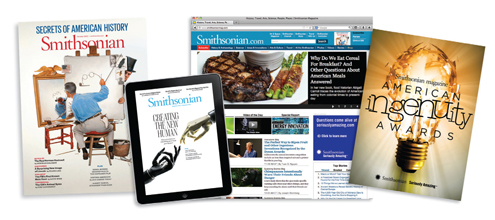
The SmithsonianWith 19 museums, a magazine, a tablet edition, a website and events, the Smithsonian has plenty of ways to reach its membership.
ASAEThe American Society of Association Executives launched a suite of new products in 2012—a website redesign, newsletter and dedicated app.
Society for Human Resource Management
SHRM’s media assets celebrate revenue generation as much as content creation.
The Sierra ClubThe organization’s “explore, enjoy, and protect” motto couples well with the non-profit’s push for reader interactivity.